October 2, 2026
- info@itsindiaforum.com
- +91 9599786300
Translating global best practice into India-specific standards, pilots and policy that can be scaled nationally.
Road safety remains India’s most urgent mobility challenge. The country recorded an estimated 1.83 lakh road fatalities in 2025 which is among the highest in the world imposing a severe human, social and economic cost. Reducing these deaths through safer drivers, safer vehicles, safer roads and intelligent, data-driven systems is a central motivation behind the ITS India Forum’s work and its commitment to the Viksit Bharat 2047 zero-fatality vision.
The urgency of acting now cannot be overstated. India stands at a decisive inflection point: motorisation and urbanisation are accelerating faster than ever at an estimated cost of close to three per cent of GDP, and the enabling technologies — artificial intelligence, connected-vehicle systems, barrier-free tolling and India’s maturing Digital Public Infrastructure — have, for the first time, reached the scale and readiness needed for deployment at national level. The choices made in this window will shape the safety, efficiency and sustainability of Indian mobility for decades to come, because the corridors, standards and systems established today become difficult and costly to change later. Every year of delay compounds the human and economic toll and narrows the runway to the Viksit Bharat 2047 zero-fatality vision. Addressing these interlinked challenges now — in a coordinated way and on a shared technical foundation — is therefore not merely desirable but essential.

Support India’s transition to sustainable, inclusive and low-carbon mobility decarbonising transport through stronger public transport, EV and clean-energy adoption, non-motorised transport, transit-oriented development, multimodal integration and sustainable freight; aligned to Viksit Bharat 2047 and India’s net-zero commitments.

Make walking and cycling safe, connected and attractive through ITS — vulnerable-road-user (VRU) detection, signal priority, bike-share integration and NMT data — cutting congestion, emissions and VRU fatalities; in line with ‘Streets for People’ and India Cycles4Change.

Guide the responsible adoption of AI for traffic management and urban decongestion in Indian cities and on national corridors; aligned to the Forum’s UrbanAI roadmap and the IndiaAI Mission.

Build the skills, research and indigenous-technology ecosystem for scaled, high-quality ITS adoption through the Forum’s Academy, academic partnerships and startup incubation; in support of Make-in-India and Viksit Bharat 2047.
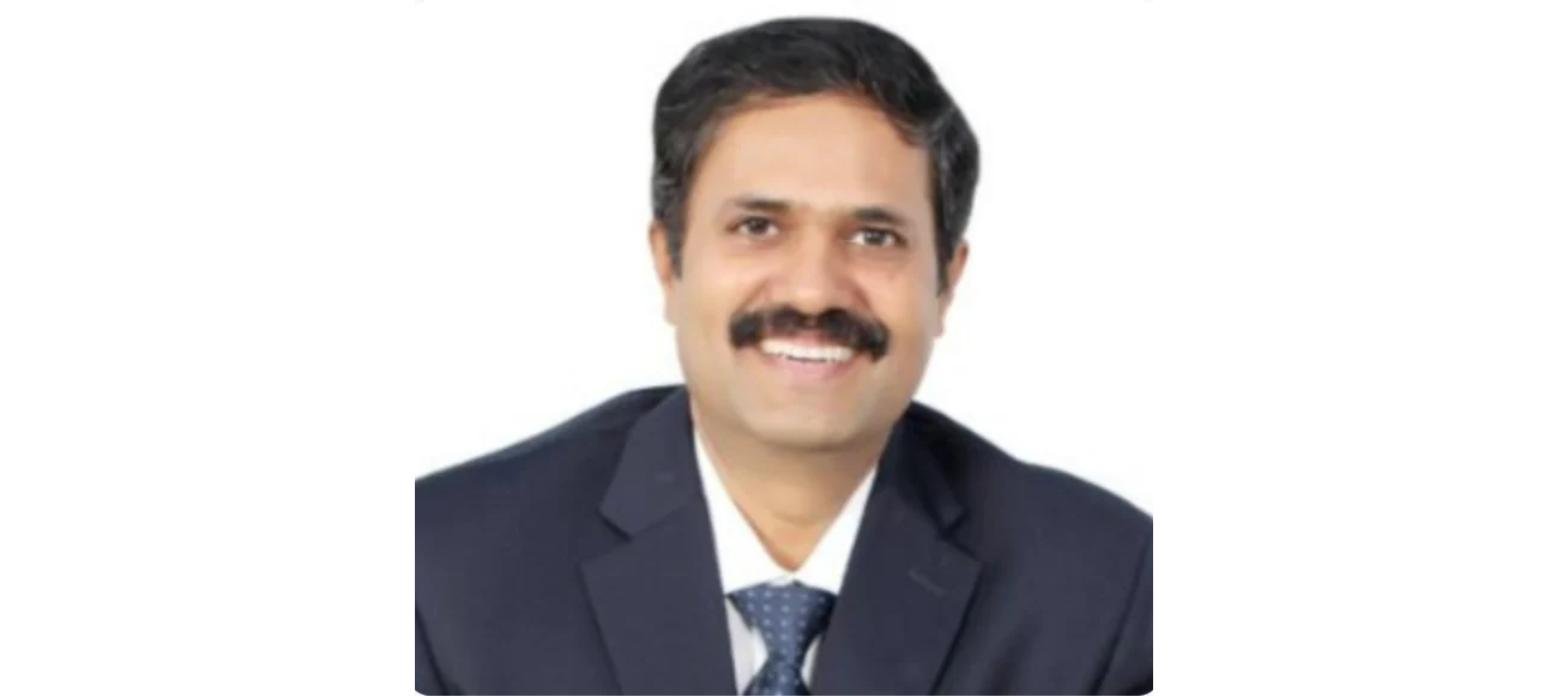
Improve road safety by building a CIBIL-like Safe Driving Score that measures, scores and continuously improves driving behaviour at population scale powered by an explainable, privacy-first AI advisory layer (SafeDrive GPT) and India’s Digital Public Infrastructure (Aadhaar, DigiLocker, Account Aggregator, FASTag).
Design a next-generation, barrier-less tolling and distance-based Road User Charging (RUC) framework for India covering technology, policy, interoperability, accuracy and privacy to support MoRTH’s barrier-free tolling programme and sustainable road funding.

Build the standards, spectrum and testing frameworks for vehicle-to-everything (V2X) connectivity and connected/autonomous mobility in India, institutionalising the Forum’s Connected Vehicle Systems community.

Make public and shared transport safe, comfortable and accessible for women through ITS — SOS/panic under AIS-140, CCTV analytics, safe-route guidance and gender-disaggregated data advancing women’s mobility and economic participation under Mission Shakti.

Across all committees, activities follow a common, structured pattern that carries each theme from assessment to a deployable outcome. Every committee first reviews the current Indian scenario and benchmarks global best practice, then develops India-specific standards, frameworks and reference architectures, identifies three to five pilots with viable financing or PPP models, and convenes stakeholder consultations. These activities converge on a consistent set of key deliverables: a comprehensive report or white paper carrying the committee’s technical standards and policy recommendations; an industry summit or stakeholder consultation to present the outputs; and a practical framework that evaluates interventions across environmental, economic, social, safety and implementation parameters.
Taken together, these standing committees represent a coordinated, mission-aligned response to that imperative. Each brings focused expertise to a clearly defined theme, yet all are bound by a common purpose and a common method — translating global best practice into India-specific standards, pilots and policy that can be scaled nationally. By uniting government, industry and academia under a single platform, the ITS India Forum seeks to convert fragmented effort into collective momentum and turn recommendations into deployable, real-world outcomes. As these committees move from constitution to delivery, the Forum reaffirms its commitment to building mobility that is safer, greener, smarter and more inclusive for every Indian — and invites partners across the ecosystem to join in shaping that future.

Experience the future of Transportation Explore the world of ITS with ITS India Forum
Address: 6th Floor, Arunachal Building, Barakhamba Road, Delhi
Phone: +91 9599786300